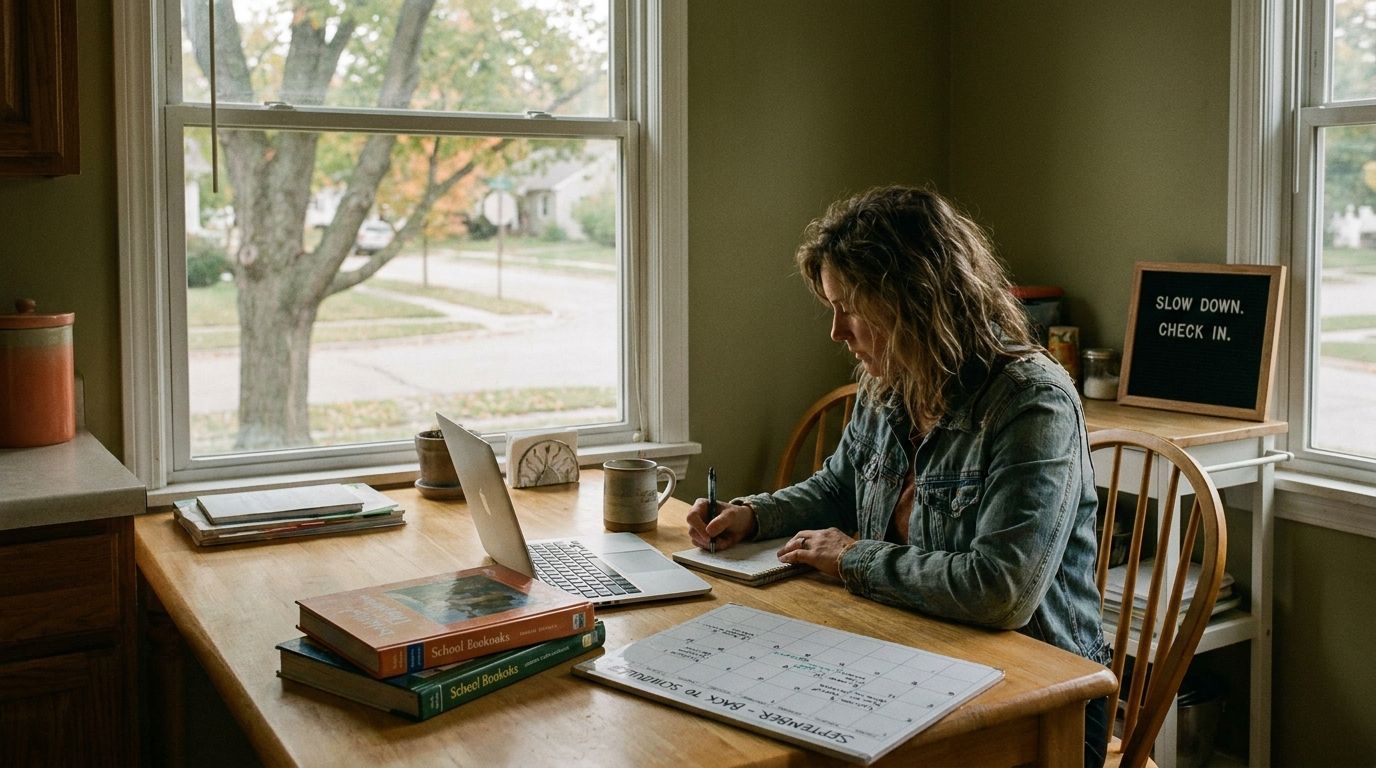
Hello, September. The days have shortened, the schedule has more shape to it, and the last golden stretch of summer is behind us. With or without kids in the house, most of us are feeling the return of schedules, structure, and a faster pace. The transition feeling can tip into overwhelm if we aren’t careful. Shifting our perspective and using this natural change of season as a prompt for a check-in helps us settle into it with intention rather than getting swept along.
This is how the idea of living by design, not by default first entered our vocabulary and it has become one of those simple phrases that reshaped how we check-in with each other. We’ll share our perspective on the phrase and how to use these first weeks of fall to notice what's running on autopilot in your life, and decide, on purpose, what you want the next season to look like.
Default Isn't the Enemy
Default Isn't the Enemy
A quick search for "by design, not default" turns up no shortage of books, podcasts, and blogs on the topic. When we first came across the phrase "by default," our instinct was to treat it as something negative: a shortcut, a bad habit, a sign that something wasn't being done intentionally enough.
But the truth is more forgiving than that. Large parts of our lives run on autopilot, and most of those defaults exist for good reason. They save mental energy and lean on the comfort of the familiar. The route you take to work, the way you handle bedtime, the order you place without even glancing at the menu: it’s simply how a busy mind conserves itself.
The trouble starts when a habit, a boundary, or a routine that once served you well quietly keeps running long after it's stopped being a good fit. Nothing forces a default to announce that it's expired. It just keeps going, unquestioned, until something (or someone) prompts you to notice. Default isn't the enemy. Unexamined is.
Big Change is Built From Small Decisions
Big Change is Built From Small Decisions
It's natural to assume that living "by design" requires some kind of dramatic overhaul, which sometimes life does call for that. But more often, there's more power in the accumulation of small, repeated choices than in any single grand gesture.
It's what you say yes to and what you politely decline. It's the boundary you protect even when it's inconvenient. It's the ten-minute walk you actually take instead of the one you keep meaning to. None of these choices look like much in isolation, but the intentionality you bring to each one adds up. And that accumulation, more than any single decision, is what shapes a season, and eventually a life. It just takes a little more awareness brought to the areas that have been quietly running in the background.
Three Prompts for Intentionality:
Three Prompts for Intentionality:
- Know your non-negotiables - time is the one resource we can never get more of, which makes it worth asking: who and what gets my time and energy, and why? This isn't about landing on the ideal schedule or the perfect job title. It’s about naming the handful of things that matter most, so you have something to measure your choices against when life inevitably asks you to trade one thing for another. It's a surprisingly useful question to sit with across all kinds of scenarios: at work, within the family, or even when you're planning a vacation or a weekend getaway.
- Create space to reconnect - this looks different for everyone, and it can even look different for the same person at different times of life. For one family, it might be a standing coffee catch-up before the day gets away from them. For another, it's ten quiet minutes on the couch with tea after the kids are asleep, simply asking, "how are we really doing?" What matters isn't the specific format, but rather building in some regular, low-pressure space to actually check in, before too much time passes and the check-in starts to feel overdue.
- Put your oxygen mask on first - you probably know the line and may be able to recite it from memory: secure your own mask before assisting others. It can feel almost counterintuitive to anyone used to putting everyone else's needs ahead of their own, which, if we're honest, describes most of us. But the logic holds up outside the airplane cabin, too. When your own needs go unmet for too long, you have less capacity, less patience, and less energy to give the people who depend on you. Self-care isn't indulgent. It's the thing that makes everything else possible.
A Few Questions to Consider This Month:
A Few Questions to Consider This Month:
- Of the three practices above, which one feels weakest for you right now?
- What is one small step that would bring more intentionality to that area?
- Going into the fall, what does “by design” look or feel like for you?
Enjoy the shift into fall. And somewhere in between the first cool mornings and the return to routines, take a few minutes to check in with yourself. Not an overhaul. Just to notice what’s working, what isn’t, and where a little more intention might carry you further than you’d expect.