
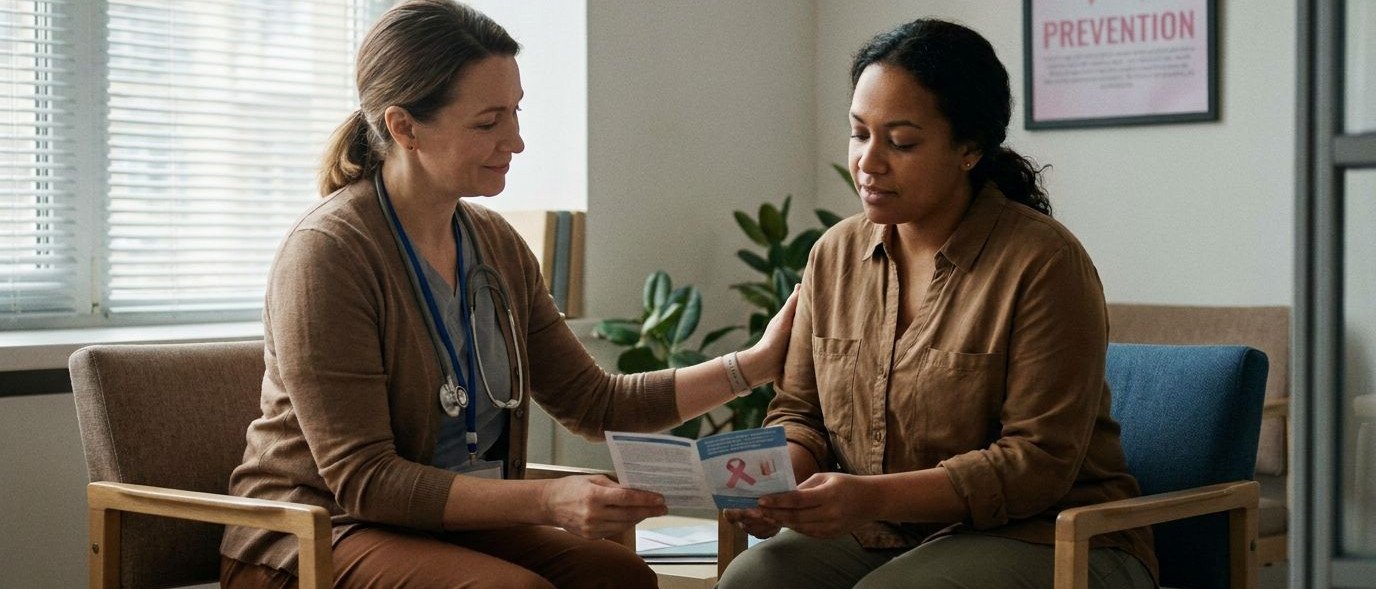

For some, October’s pink ribbons are a reminder to schedule a mammogram. For others, they bring memories of treatment, uncertainty, a loved one’s experience, or a loss that still feels close. Breast Cancer Awareness Month holds many different meanings, and each deserves care and respect.
Last October, our article, 6 Proactive Steps for Breast Cancer Prevention, explored daily habits that support health. This year, we are building on its nutrition and movement themes while bringing essential breast care into sharper focus: understanding your risk, following an appropriate screening plan, and seeking timely evaluation of changes.
Healthy habits can help lower risk, but they cannot eliminate it. A breast cancer diagnosis is never evidence that someone failed to care for themselves.
Make Screening Part of Your Care
This month’s theme of Listening to Your Body carries an important companion message: breast cancer can develop without noticeable symptoms. Feeling well is not a reason to postpone recommended screening.
Mammography remains the foundation of routine breast cancer screening. For women at average risk, the U.S. Preventive Services Task Force recommends a mammogram every two years from ages 40 through 74. The American Cancer Society recommends annual mammograms from ages 45 through 54, with the option to begin annually at 40; at 55 and older, women may continue annually or switch to every two years.
Because respected guidelines and screening options differ, talk with your healthcare provider about the schedule and screening type that fits your age, risk, health, and preferences. Screening also requires follow-through: complete any recommended additional imaging or biopsy after an abnormal result.
Understand Your Personal Risk
Your screening plan should reflect your history. Share previous breast biopsy results, any history of chest radiation, and cancer diagnoses on both sides of your family, including relatives’ ages at diagnosis.
A strong family history or a known inherited gene change may warrant genetic counseling and a different screening plan. Some people at high risk need annual breast MRI in addition to mammography, often beginning earlier. A breast specialist can also discuss preventive medication or, for selected people at very high risk, surgery.
If your mammogram report mentions dense breasts, ask what that means for you. Dense tissue can make cancer harder to see on a mammogram and is associated with increased risk. Additional imaging is an individualized decision, rather than an automatic requirement for everyone with dense breasts.
Focus on Meaningful Risk Reduction
Building on last year’s discussion, several practical steps have established support:
- Move regularly. Physical activity is associated with lower breast cancer risk. Work toward a sustainable routine that suits your abilities.
- Choose less alcohol. Even small amounts can increase breast cancer risk. Avoiding alcohol offers the greatest risk reduction related to drinking.
- Support a healthy weight. Excess body weight after menopause is associated with greater risk. Approach weight concerns with individualized guidance and kindness.
- Review hormone therapy with your prescriber. Discuss benefits and risks in the context of your symptoms and health history.
Meals rich in vegetables, fruit, beans, and whole grains support overall health. However, no particular food or supplement has been proven to prevent breast cancer. Rest and emotional support also matter for well-being, without promising protection from cancer.
Respond to Changes Promptly
Become familiar with how your breasts normally look and feel. Contact your healthcare provider promptly about a new breast or underarm lump, skin dimpling, new nipple inversion, unexpected nipple discharge, or another new breast change.
Many changes have noncancerous causes, but evaluation matters—even after a recent normal mammogram. Breast awareness complements screening; it does not replace it.
Care for the Whole Person
At the Functional Medicine Center of New Jersey, supporting overall well-being belongs alongside established breast care. Nutrition guidance and help with daily health habits should complement mammography, breast specialist evaluation, and oncology treatment when needed. Supplements and complementary therapies should be reviewed with the treating team.
This October, consider one concrete step: schedule a breast cancer screening test, discuss your family history, follow up on a result, or offer practical support to someone receiving treatment.
Breast health deserves both informed action and compassion—for ourselves and for every person whose life has been touched by breast cancer.